
DESPATCH #002: THE VICE PRESIDENCY – SILENCE IN SESSION, ORDER IN DELIBERATION
A Constitutional Meditation on the Second Office of the Republic
by Aamir Khan Wali
Abstract: This essay examines the Vice Presidency of India as a constitutional institution that operates not through visibility but through equilibrium. Situated between executive symbolism and legislative procedure, the office embodies the constitutional management of deliberation itself. Through structural analysis, parliamentary function, comparative institutional design, and lived encounters within the architecture of state, the essay argues that the Vice Presidency represents the Republic’s commitment to ordered discourse. It is an office that does not govern, does not adjudicate, and rarely commands public attention. Yet it sustains the very conditions within which democratic speech becomes law. Through the Chair of the Rajya Sabha, the Vice President converts plurality into procedure, disagreement into deliberation, and voice into institutional order. The office thus reveals a constitutional truth parallel to that of the Presidency: that democracy is secured not only by power restrained, but by discourse disciplined.
I. WHY TURN FROM THE PRESIDENT TO THE VICE PRESIDENT?
If the Presidency represents power withheld, the Vice Presidency represents speech regulated.
Constitutional attention naturally gravitates toward visible authority. We study institutions that decide, command, or enforce. The Vice Presidency does none of these things in any conventional sense. It governs no ministry. It executes no policy. It represents the state only contingently. Yet it presides constantly over something more volatile than executive authority. It presides over human disagreement institutionalised.
The Vice President of India is, in constitutional design, the guardian of deliberative order.
As ex officio Chairman of the Council of States, the office stands at the precise intersection where democratic plurality threatens to become democratic chaos. The Rajya Sabha is not merely a chamber of legislation. It is the constitutional arena in which federal interests, political dissent, ideological conviction, and institutional rivalry converge in structured contestation. The Vice President does not shape the content of these forces. He shapes the form through which they are expressed.
This is authority without authorship.
Order without ownership.
Presence without intervention.
The Vice Presidency is not passive. It is stabilising.
Where the President symbolises the unity of the Republic, the Vice President sustains its conversation with itself.
II. A GLOBAL VIEW OF SECOND OFFICES
Second offices in constitutional systems are rarely celebrated. They are designed for continuity rather than prominence.
In the United States, the Vice President exists primarily as successor and legislative presiding officer. In many parliamentary democracies, no equivalent office exists at all. Where it does exist, it often performs procedural or contingency functions rather than substantive governance.
India’s Vice Presidency is distinctive because it fuses two constitutional purposes:
Continuity of executive representation in the event of presidential vacancy.
Institutional management of legislative deliberation in the federal chamber.
This duality reflects constitutional foresight. The framers understood that stability requires both succession and procedure. Power must endure. Speech must be structured.
India therefore created an office that embodies preparedness and process simultaneously.
III. CONSTITUTIONAL LOCATION OF THE OFFICE
Articles 63 to 71 establish the Vice Presidency. The structure is spare. The design is precise.
The Vice President is elected by members of both Houses of Parliament. This mode of election situates the office within the legislative community rather than the executive hierarchy. The Vice President is therefore not merely an alternative President. He is a parliamentary constitutional functionary entrusted with maintaining the grammar of legislative conduct.
As Chairman of the Rajya Sabha, the Vice President does not debate. He does not vote except in tie. He does not represent political will. He regulates its expression.
The Constitution assigns him not power over outcomes, but authority over procedure.
This distinction is foundational. Outcomes belong to democracy. Procedure belongs to constitutionalism.
IV. THE CHAIR AS CONSTITUTIONAL INSTRUMENT
A presiding officer performs a task more subtle than governance. He governs the conditions of governance.
Every legislative chamber contains competing forces: urgency and delay, speech and interruption, persuasion and obstruction. Without procedural discipline, these forces dissolve into noise. With excessive control, they suffocate representation.
The Chairman of the Rajya Sabha must therefore maintain equilibrium between expression and restraint.
He enforces rules that allow disagreement to become intelligible.
He moderates tempo without controlling substance.
He sustains legitimacy by ensuring fairness of voice.
In this role, the Vice President becomes the custodian of democratic tempo.
The chamber breathes through him.
V. JUDICIAL AND CONVENTIONAL RESTRAINT
Indian constitutional practice has consistently preserved the neutrality of the Chair. Judicial engagement has been cautious. Parliamentary privilege and internal procedure remain largely self-regulated.
This restraint reflects constitutional trust. The Vice President is expected to embody institutional impartiality. The authority of the Chair depends less on legal enforcement than on collective recognition of fairness.
The office operates through legitimacy accumulated in real time.
VI. ENCOUNTERING THE OFFICE THROUGH PERSONHOOD
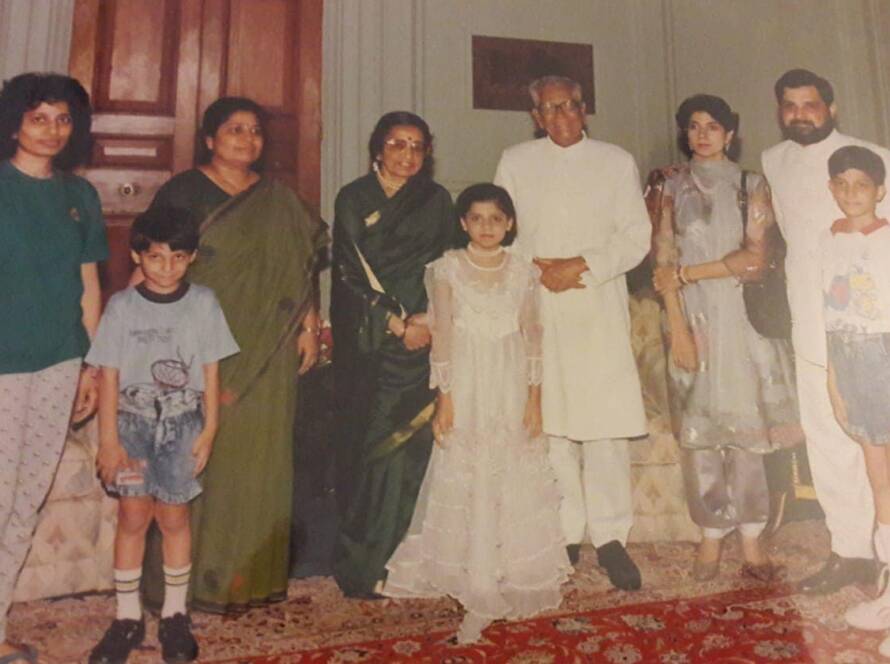
My understanding of the Vice Presidency did not begin with constitutional text. It began with presence.
Growing up within proximity to institutions of state, I encountered the office not as abstraction but as temperament embodied. Among the figures who shaped that understanding most profoundly was Shri Hamid Ansari.
To a young observer of public life, he represented composure as discipline.
His bearing was not theatrical. It was measured. Speech was deliberate. Listening was attentive without performance. He carried the stillness of someone accustomed to diplomacy, scholarship, and institutional patience.
What struck me most was not authority, but calibration.
He moved through conversation as one who weighs language before releasing it into public space. Each word appeared situated rather than spoken. Each pause seemed intentional rather than incidental.
For a budding lawyer learning the craft of argument, this was instructive in ways no textbook could be.
I observed that authority in constitutional office often manifests not through persuasion but through equilibrium. He did not dominate discourse. He stabilised it.
VII. THE DIPLOMATIC MIND AND THE PARLIAMENTARY CHAIR
My later study of his intellectual and diplomatic career revealed continuity between temperament and institutional function.
Years in diplomacy cultivate attentiveness to nuance. Multilateral negotiation demands patience with complexity. Academic inquiry requires comfort with ambiguity.
These are precisely the qualities required to preside over a chamber of states.
A legislative assembly is not unlike an international forum. Each participant represents interest, identity, and perspective shaped by different constituencies. The presiding authority must ensure engagement without escalation.
The Vice Presidency thus found in him not merely an office holder but an institutional personality suited to its demands.
VIII. THE EDUCATION OF A YOUNG LAWYER
As I moved deeper into legal practice, I came to appreciate the parallels between courtroom procedure and parliamentary order.
Both transform conflict into structured exchange.
Both rely on rules that restrain excess without extinguishing voice.
Both depend upon presiding figures whose legitimacy rests on impartiality rather than power.
My encounters with the Vice President’s office clarified something essential: institutions endure not because they eliminate disagreement, but because they civilise it.
The law persuades.
Parliament deliberates.
The Chair sustains.
IX. THE VICE PRESIDENCY IN AN AGE OF AMPLIFIED VOICE
Modern political culture rewards immediacy, assertion, and spectacle. The discipline of listening appears antiquated. The management of procedure appears secondary to expression.
Yet precisely in such an age, the Vice Presidency becomes more necessary, not less.
When speech accelerates, order must deepen.
When disagreement intensifies, procedure must stabilise.
When attention fragments, continuity must be preserved.
The Vice President represents the Republic’s refusal to allow velocity to replace deliberation.
X. THE SECOND OFFICE AS STRUCTURAL HUMILITY
The Vice Presidency teaches a constitutional lesson distinct from but complementary to that of the Presidency.
The Presidency demonstrates restraint in authority.
The Vice Presidency demonstrates restraint in speech.
Together they encode the architecture of democratic maturity.
One holds power without exercising it.
The other holds conversation without possessing it.
Both sustain legitimacy by refusing appropriation.
XI. CONCLUSION: THE OFFICE THAT LISTENS
If the Presidency is the Republic’s conscience, the Vice Presidency is its composure.
The President symbolises unity.
The Vice President sustains dialogue.
The Constitution relies upon both.
My encounters with the office, and with Shri Hamid Ansari in particular, left me with an enduring impression: that the highest institutional responsibility may not be to speak, decide, or command, but to ensure that others may do so without disorder.
The Vice Presidency is the architecture of listening made constitutional.
It is the Republic regulating its own voice.
Fides et Ordo | Trust & Order
— Aamir Khan Wali
The Chambers of Amir Khan Wali
The Armoury • The Despatch • Network Intelligence